Location Dima, Bizkaia
Site chronology: Middle Palaeolithic
Principal Investigator (PI): Jesús González-Urquijo y Talía Lazuen
Research group: PALEO (Historical dynamics of the Palaeolithic, Palaeotechnologies, Palaeoenvironments)
Contact email: paleo@unican.es
Axlor


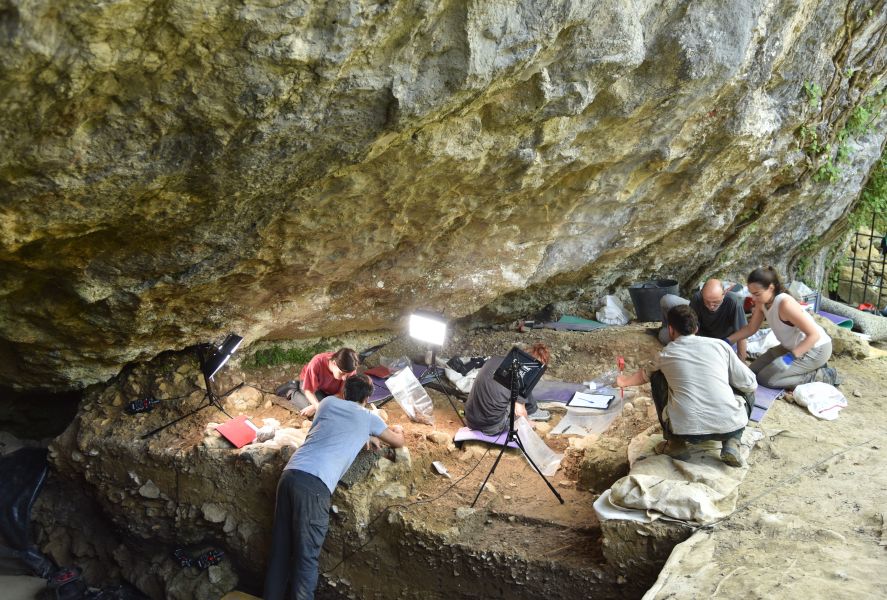
Axlor Cave is situated in Dima (Bizkaia), at an altitude of 320 metres above sea level. It lies in a transit zone at the lowest point between the peninsular North Atlantic basin and the Mediterranean basin.
The site was discovered in 1932 by J.M. de Barandiarán, who carried out the first archaeological excavations in the late 1960s. The current research project began in 2000 under the direction of J. González-Urquijo and J.J. Ibáñez, and has been coordinated by J. González-Urquijo and T. Lazuen since 2018 (Lazuen and González-Urquijo, 2020).
Axlor boasts a long sequence of Neanderthal occupations dated using OSL and Carbon-14 methods circa 100,000 to 40,000 bp (Demuro et al., 2023). This is a very low-energy sedimentary deposit characterised by the abundance and excellent preservation of archaeological evidence, including biomolecular, genomic and isotopic data. It reveals significant diachronic variability in technical practices and tool repertoires (González-Urquijo et al., 2005), as well as the presence of human remains in almost all layers (Bailey et al., 2024; González-Urquijo et al., 2021) and well-preserved hearth structures in contexts dating back 100,000 years (Lambrecht et al., 2021).
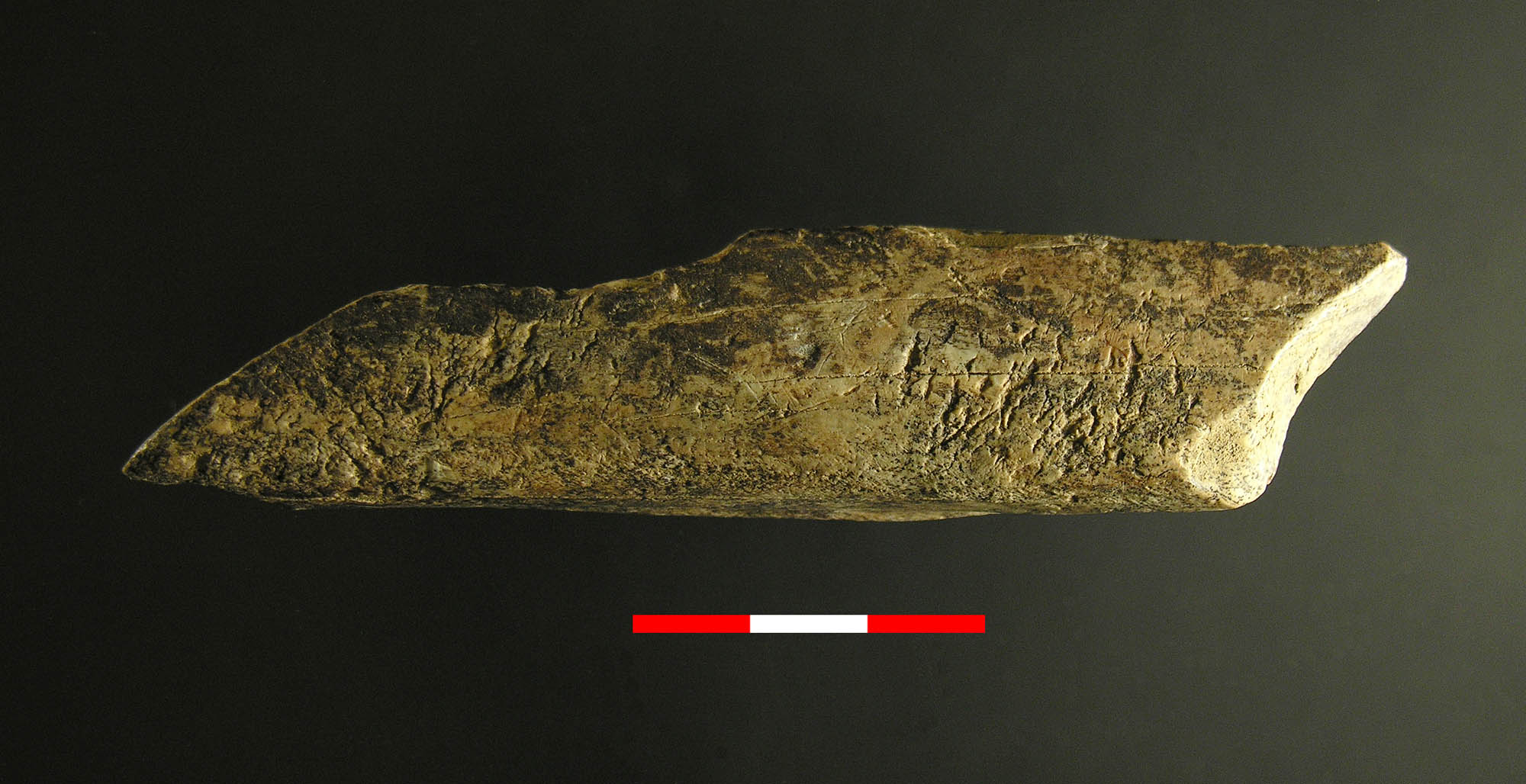
This site offers an extremely extensive record of stone tool production, comprising tens of thousands of artefacts carved from flint, quartz, lutite and quartzite. Flint is the dominant raw material, with sourcing distances ranging from 35 to 90 km – a range hitherto uncommon in Neanderthal contexts. The collection of bone artefacts is also very extensive, comprising hundreds of retouchers made from diaphyseal flakes of large ungulates, primarily deer and bison, as well as smoothers, spatulas and chisels (Mozota, 2012).
The fauna found at the site is almost exclusively the result of human introduction. It includes red deer, goats, bison and smaller numbers of horses, chamois, roe deer and rhinoceroses. At Level D, with Quina settlements dating back circa 70,000 bp: the hunting of these animals forms part of a logistical system characterised by seasonal activities centred on the warmer months and bison hunts in spring and autumn, taking advantage of the herds’ migratory movements (Uzunidis et al., 2025).
In the oldest levels (circa (100,000 bp) Analyses of lipid biomarkers, alcohols, carbon isotopes in organic residues and Raman spectroscopy of carbonaceous materials all point to the importance of plant material – particularly leaves and branches – in the formation of the deposit (Rodríguez de Vera et al., 2020; Jambrina et al., 2024).
The overall objectives of the project focus on (1) contributing to the debate on the capabilities and behaviours of Neanderthal societies; (2) studying historical dynamics in south-western Europe between 100 and 40 ka; (3) interpreting palimpsests to identify discrete events of activity and recover information on spatial structures, whether visible or latent; (4) analysing the evolution of human populations based on palaeogenetic data; (5) reconstructing the Upper Pleistocene environmental conditions contemporary with the last Neanderthal societies; and (6) assessing the relationship between environmental changes and historical changes based on chronologically well-calibrated evidence sets.