A key aspect of the conservation and protection of caves housing important archaeological sites is the assessment of the stability of the rock mass, which is also important for the safety of people passing through them. The first studies carried out by the Institute in this area of research were conducted in the Altamira and Estalactitas caves (Altamira Museum and Research Centre).
Archaeological sites

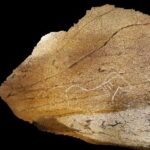
Armintxeko koba
The Armintxe Cave is home to one of the last Palaeolithic rock art sites discovered in the Cantabrian corridor. Although this region already boasts some 150 decorated caves, Armintxe stands out for its technical and display features, as well as for certain aspects of its iconographic repertoire.
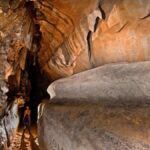
Atxurrako Kobie
The Atxurra Cave is the perfect example of the discoveries made in the Basque Country during the second decade of the 21st century, which have filled the ‘gap’ in Palaeolithic cave art that previously existed in the region. Although it has been known since 1882, when the entrance to its lower level – known as Armiña – was opened up during the construction of the road between Markina and Lekeitio, and has been heavily visited by cavers and tourists, its rock art was not identified until 2015.

Axlor
The Axlor site contains one of the best-preserved Middle Palaeolithic sequences in the Cantabrian region. The archaeological record spans a period of 50,000 years of Neanderthal history. Its excavation and research are being carried out as part of a multidisciplinary project aimed at studying the historical dynamics of Neanderthal societies.
Chora Cave
La Chora Cave is situated in the village of San Pantaleón de Aras, which forms part of the municipality of Voto (Cantabria), specifically at the foot of a small hill next to a meadow into which it drains. It is located very close to the River Clarín and just a few kilometres from the estuary of the River Asón.
Chufín Cave
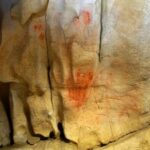
The Chufín Cave (also known as the ‘Cueva del Moro Chufín’) is situated in the Cantabrian municipality of Rionansa, on a north-west-facing cliff overlooking the former course of the River Lamasón, very close to its confluence with the River Nansa. Its Palaeolithic art was discovered in 1972 by Manuel de Cos Borbolla, his sons and the reservoir warden, Primo González.
El Mirón Cave
El Mirón Cave (Ramales de la Victoria, Cantabria) was discovered in 1903 by Lorenzo Sierra, at the same time as the neighbouring painted caves of Covalanas and La Haza. However, the existence of an extensive archaeological site went unnoticed for several decades, which contributed to its excellent state of preservation. The cave was subsequently visited in 1973 by Lawrence Straus, who was impressed by its great potential.

El Pendo and El Juyo. A geological and geomorphological study.
Geological surveys and assessments of active processes are suitable tools for defining protection zones around cavities containing archaeological sites; furthermore, they complement and are integrated with the previously defined BIC areas.
Latest news